Tuesday, January 31, 2006

Fat Cat


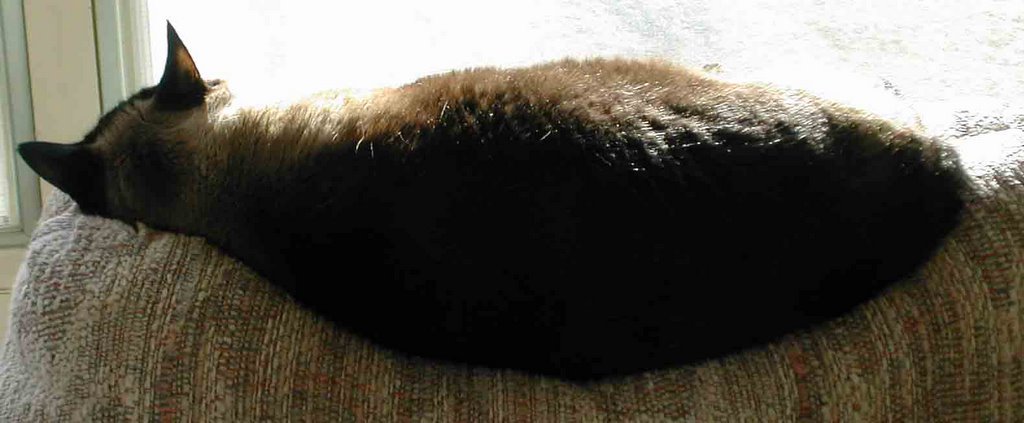
Our cat is fat.

I thought it was cool to have a cat the size of Godzilla until the vet told us the fat in the cat’s neck was crushing his windpipe. Which meant, the cat had to go on a diet.

The cat was not amused.

Not only did this life-saving diet plan mean he had to eat diet food. It meant he didn’t get that much of it either.

And then I learned: cats lie.

Dogs don’t lie.

I love you. I want to go outside. Yeah, I dug that hole. Ain’t it a beaut.

Dogs don’t lie.

Cats, on the other hand, will lie to your face with nary a guilty twitch.

Maybe that’s how the phrase Fat Cat got to be associated with politicians.

I am not a crook.

I will not raise taxes.

I did not have sexual relations with that woman.


Irag has weapons of mass destruction.


You forgot to feed me today.


Liar.

Saturday, January 28, 2006

Jake and Heath

I saw this today and what struck me was the economy of the script.

When we first meet Ennis and Jack, neither says a word but oh so much is revealed.

We know Jack is on the make as soon as he leans against his truck and looks at Ennis.

Every movement Ennis makes is clenched. From the way he holds that paper bag to how he ducks his head and never looks up.

Much later in the film, about the time I'm wondering, can anyone tell these boys are gay, there's a scene with Jack telling his wife that she must call their son's teacher because he's complained too much and the teacher doesn't like him.

In the Thanksgiving Day scene where Jack finally tells off his jackass father-in-law, how much is conveyed by that little smile and proud nod to the son from Jack's wife. Amazing.

For me though, the same economy works against the picture, because I wanted to know more of the story. The structure after the first Act is episodic. It was like playing peek-a-boo with a masterpiece. Why can't we see the whole thing?

If the audience wants more at the end of a film, are they happy with the picture or frustrated by it? At least it will keep them talking about the movie long after the lights come up.

Friday, January 27, 2006

Wannabee Scribe Discovers Secret Of The Universe!


So, I’m writing my script this morning, and it occurs to me, this seems to be moving along a little faster than usual.

Never hesitating to look a gift horse in the mouth, my next thought was --

What’s up with that?

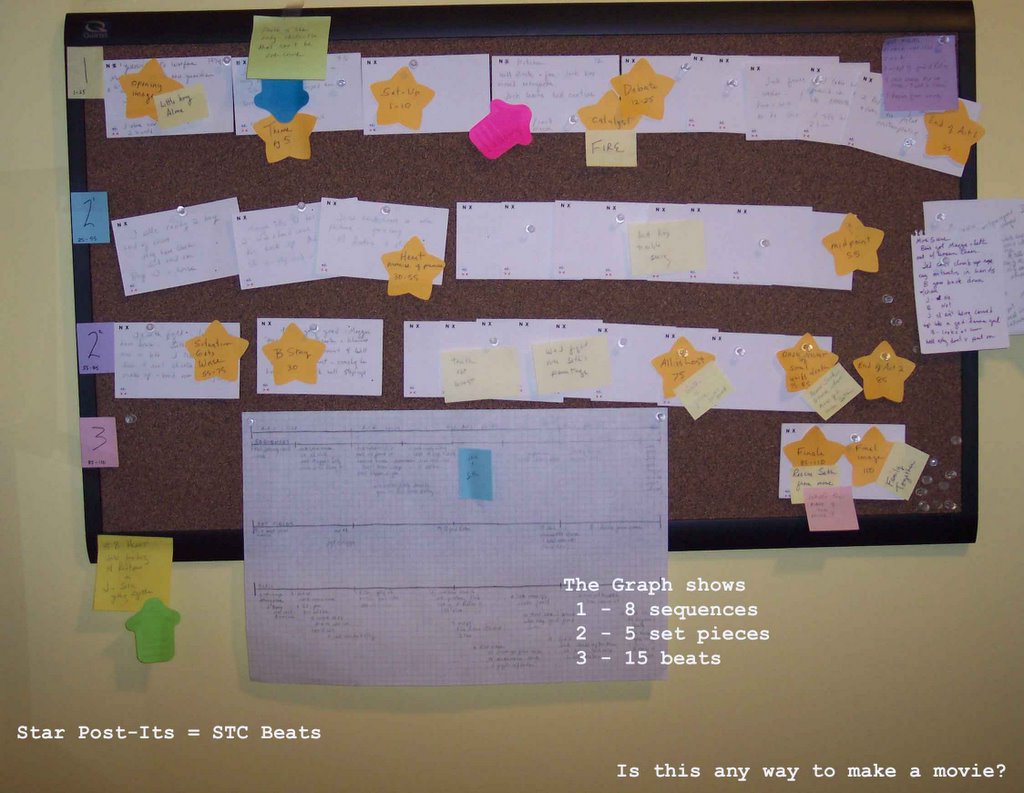
Conclusion: it’s the Board. The Save the Cat method of knowing all the Beats, Turning Points and all the Acts before the writing begins.

You know, like an outline.

DUH.

It’s not that I never outlined before. I have. Kinda.

Something like this.
  • Act 1 – this is what happens.
  • Act 2 – then this probably happens.
  • Act 3 – and finally this.
Which isn’t much help when I get stuck wondering what happens NEXT and have to sit and think and think and sit and stew and fret until something comes to me. Facing the Second Act as a blank spot the size of the Sahara can be unnerving. And time consuming.

Now that I’ve probably jinxed myself into oblivion, I’ll sign off.

Your ever faithful,

Space Cadet.

Monday, January 23, 2006

Cold Hands, Warm Heart

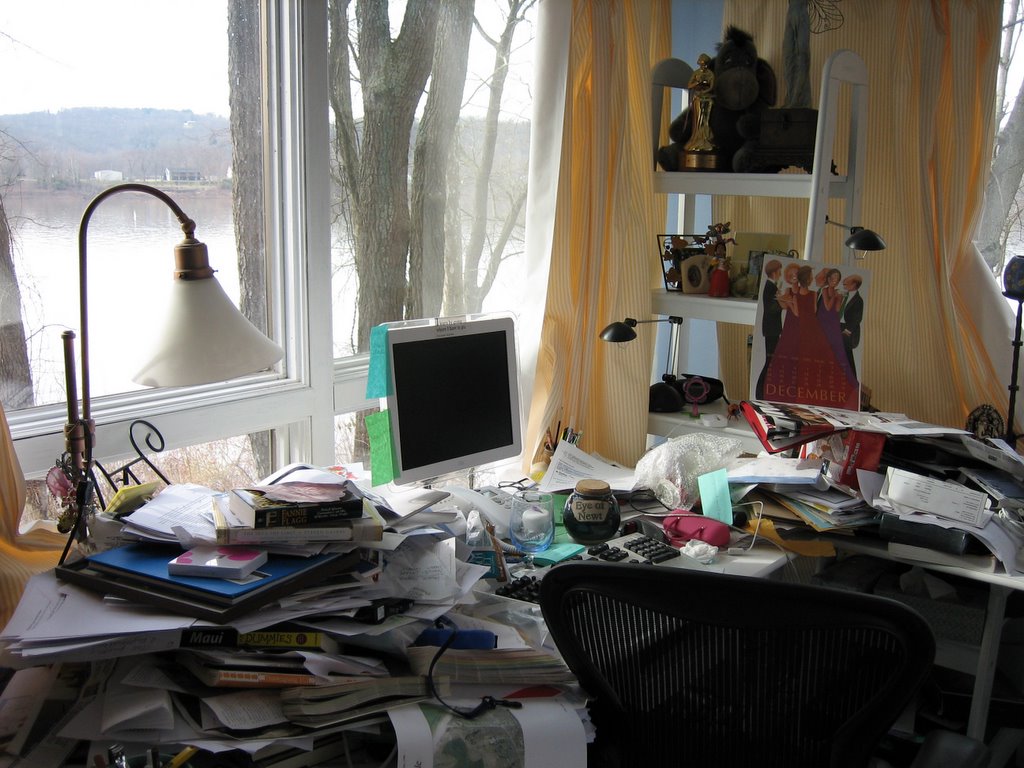
Pooks is posting a picture of her office as inspiration to clean it up. She linked to the blog of novelist Jenny Cruisie where exists this picture of Jenny's desk that made me say, "Oh my God!"

I followed one link after another and discovered, apparently, there is a sub-culture or something where friends with neat desks tease their messy desk friends into attempting desk reclamation. So far, these are all in the nature of New Year's Resolutions so results are forthcoming.

My desk is neat. I've had to dust a time or two before I could sit down to work. Aha, you think. She's a little anal. No, I am a world class procrastinator.

Remember the movie, Throw Mama From The Train? Billy Crystal plays a writer. He sits in front of his typewriter. Then he sharpens some pencils. Then he sharpens some more pencils. Then he puts the pencils in a neat line. The second pencil is where I started laughing, and thought, a real writer wrote that.

So, my desk is neat.

Pooks has an idea, everybody should post a picture of their office. Ok.


My old desk doesn't arabesque,
in the morning when I first arrive.
It's a pleasure to see it's waiting there for me
to keep my hopes alive.

Good Old Desk -- Harry Nilsson

Friday, January 20, 2006

Constructing the Script


I hate to read craft books, which may account for my success or lack thereof. I do read them, but it’s usually while making a horrible face.

I recently found one that’s more than merely palatable. It helps.

Save The Cat by Blake Snyder is full of insights on how and why Hollywood works the way it does. More importantly for screenwriters trying to break in, STC offers tools and methods to create a better screenplay.

When I started writing screenplays, my biggest problem was plot. I found an interesting device in a book called What A Producer Does by Buck Houghton. According to Houghton, producers graph scripts to "balance" the story. I started graphing my scripts to see where the plot went CLUNK.

Which is why, I’m used to taking them apart after the fact. Snyder’s STC advice is know all the parts, and know them well, BEFORE the writing commences.

In a moment of serendipity, I was trying to find someone to tell me how many beats the average script contained when I followed a link to STC. (Isn’t the Internet wonderful? Yes, it is.)

Armed with Snyder’s Beat Sheet and Board system, I figured out the 15 beats for my latest script, but what the heck could I do with 40 blank scene cards?

They mocked me from the board.

“We’re b l a n k,” they said.

“And there’s a heck of a lot of us.” :P

Well, they weren’t all blank. Several scenes I knew by heart, as they were what drew me to this story in the first place. But they were woeful few and patiently silent on the board.

So, I went back to the graph.

One line for the Act Breaks. And, I’m sticking with where STC says they are.

One line for sequences, which is how I finally learned plot. From my previous work, I knew my scripts always had seven or eight sequences.

One line for the set pieces. Five of them. (According to a WGA mentor who explained this concept to me in an email.)

One line for the beats. 15.

Voila!

There it was. A plan. A map. A nice piece of forethought that did not mock me from my wall.

The blank scene cards said, “Nah-nah!”

The graph says, “Right this way, doll.”

Now all I have to do is, you know, write the thing.